When wine drinkers think of the white grape, Viognier, the first place that comes to mind is the Rhone region of France. Also produced in North America, Australia, and South Africa, Italy is the last place I thought I would find this grape. This week, I was surprised and delighted to discover a local Viognier offered on the menu at a restaurant in Orvieto.
Just exactly where Viognier originated is basically unknown; it is thought the ancient Romans might have brought it to France. As recently as 2004, a study at UC Davis did a DNA profile, discovering Viognier closely matched a Piedmont grape, Freisa. Surprisingly, it is also a genetic cousin to Nebbiolo.
The restaurant we had lunch at in Orvieto was Il Malandrino Bistrot. We decided to eat light, ordering a few antipasti. The wine we selected was a Viognier from a local winery, Madonna del Latte. Located between Orvieto and Lake Bolzano, the winery has been in operation since 2000, currently producing all organic wines.
On the nose and palate, there were citrus fruit, peach, and apricot notes. The palate was also smooth, with a refreshing finish. It paired well with the fish appetizer we ordered. I thought it was an exceptional pairing with our flavorful cheese appetizer.
Unfortunately, I did not have more time to explore other wines from Madonna del Latte, doing one of their winery tastings. In addition to the Viognier, they produce a Cabernet Franc, which, again, I would not think would be produced here. They also do a Pinot Nero (Noir) which is done, but rare.
If you are ever in Orvieto, book a winery tour at Madonna del Latte, followed by dinner at Il Malandrino Bistrot. It will be a most enjoyable and memorable day!
This past week at Fattoria del Colle in Trequanda, Siena, I had the pleasure of imbibing many of the amazing wines from the Fattoria, as well as from their other winery, Casato Prime Donne. Each evening we enjoyed a different bottle with our carefully and lovingly prepared Tuscan meal. During our first full afternoon, we were also taken on a tour of the Fattoria property and cantina, while learning the history of the owner, Donatella Cinelli Colombini, her family, and also sampling their wines.
The wines from both properties are all organic, grapes hand-picked with only the rain to irrigate and help them grow. In the cellar, they use bigger French oak barrels from Burgundy for a slower aging process.
At dinner the first evening, we had one of the only white wines we would drink all week, Sanchimento IGT Toscana Bianco. Made with the Traminer grapes grown around the chapel at the Fattoria winery, this limited production white is named after the patron saint of the chapel, San Chimento. Typically a northern grape from the Alsace (Gewürztraminer), the wine is aromatic and spicy.
The next day we toured the Fattoria, ending with a tasting of two of their wines. The first wine, Cerentola DOC Orcia, is a blend of Foglia Tonda, a rare red grape indigenous to central Tuscany, and Sangiovese, the most common grape in this region. Blended together, the two grapes bring balance to the wine; the Foglia Tonda smoothness and the Sangiovese, tannins.
The second wine we sampled was their Brunello di Montalcino from the Casato Prime Donne winery. It is at this winery, where the all female staff, produce the Montalcino wine from 100% Sangiovese grapes. This is the longest aged wine and released for sale four and half years after harvest. Full-bodied with 15% ABV, this wine has amazing tannic structure and balance.
That evening at dinner, we opened bottles of their Chianti Superiore. Grown and produced at the Fattoria, this wine is named Superiore because of the low-yield of the grapes used. Dominantly Sangiovese, small bunches of other varieties are used to maintain the Chianti tradition of blending.
The next evening, and during our “happy hour” events, we opened bottles of Leone Rosso DOC Orcia, which is one of my favorite wines at the Fattoria. A blend of Sangiovese and Merlot, which would typically get the classification of “Super Tuscan”. Since the wine is produced under the DOC Orcia appellation and not IGT, it escaped the fate of Super Tuscan classification. Well-balanced and smooth, this wine is perfect on its own or with food.
The following evening we opened their Rosso di Montalcino from the Casato di Prime Donne winery. Made from the same Sangiovese grapes as the Brunello, this wine is meant to be consumed earlier. The evening we opened this bottled we also sampled the local Pecorino cheeses, fresh and aged. This wine was a perfect pairing with the aged Pecorino.
If you ever find yourself in Siena, be sure to stop in for a wine tasting or plan an overnight stay at the Fattoria, immersing yourself in the wine, food, and culture of Tuscany. You will not be disappointed!
In the southern province of Frosinone, there is a little known town named Ripi. At the recommendation of my friend, Mia, we went to visit her family’s wine bar last evening. Open for just one year, WineRipi Cantina Diffusa, is a tiny location with a lot to offer.
Owned and operated by husband and wife team, Raffaele Cerbone, a sommelier, and Melania Persichilli, the wine bar is located on Viale Umberto I, 28 in the heart of Ripi. A native of Ripi, Melania met Raffaele while they were both serving in the military in Afghanistan in 2006. Raffaele is originally from Australia, moving to Italy at the age of 13 with his family.
Last evening we settled on a bottle red Cesanese wine, which is made from a grape indigenous to the area. Traditionally used to make sweet wines that are frizzante (slightly sparkling), Cesanese is light-bodied and also used for blending. Raffaele was kind enough to spend some time with us, chatting about the business and the various grapes grown in the area. Cabernet Sauvignon is another red grape that is planted and grows well in the region. The whites commonly grown are Malvasia and Passerina. Malvasia is often used for blending to add flavor and texture to other whites. Passerina is best enjoyed while it is young; the ones from this region tend to be full, rich, with a creamy texture.
Raffaele and Melania serve outstanding aperitivi foods at the wine bar. Because it was Friday evening, we enjoyed a nice array of fish hors d’oeuvres. They hope to expand the business, educating people about the area and what it has to offer, regarding wine, food, and traditions.
If you are ever in this area of Italy, halfway between Rome and Naples, it is worth a stop in Ripi for a glass of wine, an aperitivo and a chat with Raffaele and Melania, who will make you feel most welcomed!
Like many of you, I am sure, I have found this summer to have been, long, sweltering and very wearisome. Fortunately, I have had a place of employment to go to everyday, cranking their air-conditioning instead of mine. On this last weekend of summer, I am really happy to say farewell to air conditioning, summer wines and basically everything to do with the dog days of
In a previous post, I alluded to the fact that I am a seasonal wine drinker, gravitating to the crisp whites and the many shades of rosé during the summertime. This year I have definitely had my fill and cannot wait to pop open my inaugural bottle of red, as the weather starts to cool down and we welcome the first days of fall.
Before we don the boots and comfy sweaters, let’s take a look back on some seasonal favorites:
White Bordeaux
Located in the southwest of France, Bordeaux is situated on the bend of the Garonne River and divided into two parts; the right bank to the East and the left bank to the West. Always a fan of Bordeaux, red and white, this summer I discovered this white gem. A blend of Semillon (70%) and Sauvignon Blanc (30%), this fresh wine is lemony and herbaceous, making it a perfect match for seafood, poultry and fish.
French Sauvignon Blanc
Situated in the central Loire Valley, Touraine is known for both red (Pinot Noir and Gamay) and white wines (Sauvignon Blanc). If anyone is looking for a Sauvignon Blanc from Sancerre, which can sometimes be overpriced, I will usually recommend this wine as an alternate. Dry, citrusy, with a smooth mineral finish, this wine pairs well with any type of seafood or pork dish, as well as goat cheese.
New Zealand Sauvignon Blanc
This classic white from the Marlborough region of New Zealand has contrasting characteristics from the Sauvignon Blancs of France. Located on the South Island, Marlborough is the largest wine region in New Zealand. The cool climate of the area produces a dry white wine that combines tropical and stone fruit flavors, with a hint of grassiness; I enjoyed this one as an aperitif! Nonetheless, Sauvignon Blancs from this area are a perfect match for seafood dishes or a delicately spiced Asian cuisine.
Spanish Rosé
I have noticed that people shy away from the darker shades of rosé, thinking the lighter, Provence-style wines are the best to drink. Of course this is untrue and this summer I tried this medium colored rosé from a region 40 miles south of Madrid called La Mancha. A well-balanced blend of Tempranillo and Garnacha, this dry wine has deep notes of cherries and strawberries on the nose, with a fresh long finish on the palate. This wine would go great with barbecue, grilled meats or a nice charcuterie plate. Please open up your mind and palate to all shades of rosé.
So let’s raise a glass, bid adieu to the final days of summer and all your favorite summertime wines!
Over the past few months, a friend and I have been exploring a few of our local wine bars. A concept created in Europe, wine bars became trendy here in the United States in early 2000, with various locations cropping up in major metropolitan areas around the country. Since then, wine bars in various formats have emerged and now compete with bars and restaurants in popularity.
The basic idea of a wine bar, of course, centers around the wine, with a limited menu of beer options and cocktails. For the most part, the wine choices are wide-ranging, offering selections from around the world, while a small percentage choose to pay homage to a wine from a particular region. The food served is traditionally simple fare; small plates, cheeses, olives, charcuterie and desserts. Very few places actually have full kitchens to accommodate lunch and dinner menus.
The main concept of this bar is in the name. For $24, you can choose three wines from a list of about thirty; they include red, white, rosé, sparkling, and port. You are served three, 3-ounce glasses of your selections; these represent your flight. The food menu is very limited; it includes an array of olives, hummus, cheeses, charcuterie, salads, pizza and desserts. We stopped in during the summer; it was an all white flight for me! It consisted of a Sancerre (Sauvignon Blanc) from France, an Albariño from Spain and a White Burgundy (Chardonnay) from France; all three, good choices. The Sancerre was crisp, with melon, apple and citrus aromas and flavors. The Albariño offered citrus and orchard fruit on the nose and palate, with a slight floral finish. The well-balanced Chardonnay had apple and pear flavors and aromas; it did have a slight oakiness which I did not mind. We also split a glass of the summer favorite, New Zealand Sauvignon Blanc; as usual easy-drinking, fresh herbs and tangy citrus on the nose and palate.
My flight at Flights Bar.
From the food menu, we ordered olives, cheese and charcuterie, which was more than enough to eat. They also have a bottled beer menu, limited cocktails and an extensive whiskey (who knew!) menu that can be ordered in a flight as well. Overall it was a fun experience and comfortable environment, which we plan to revisit for a red flight before the hot temps return.
This establishment is situated in an old house, tucked away off the main street, and not very well-lit. When I finally found the parking lot, I still could not find my way in; I thought I was entering a private home uninvited. Some upgraded signage and lighting would certainly help. Once inside, the interior was not very welcoming; dark, with small, low tables (we used two) and uncomfortable cushioned benches. I realize they are going for a certain “look”, but for me it is about feeling relaxed.
On a positive note, they have a nice wine menu; their claim to fame being they serve wines from small growers/producers who practice organic, biodynamic and sustainable viticulture. At the recommendation of the server we ordered a bottle of the Kerner, a white wine from Trentino-Alto Adige, Italy. To go with that, we ordered their popular fried Brussels Sprouts with hot honey and pistachios, the Poutine and an assorted cheese board. The Kerner was a great recommendation; dry, with some floral and green fruit notes and the sprouts were a definite winner.
Kerner at Pour wine bar.
Overall, it was an interesting experience, one I unfortunately do not have to relive anytime soon.
Vinoteca, or enoteca, in Italian literally means wine shop. Unlike our wine shops, in Italy, you can kick back with a glass of wine or purchase a bottle to drink at home. Modern day vinoteche have become more bistro-like, serving snacks as well. The actual word in Italian for a wine bar is vineria.
Negroamaro and Negroamaro Rosato at Mima Vinoteca.
Mima Vinoteca, touts themselves as a restaurant and wine bar. Their wine menu is 100% Italian, while their food menu is a little bit more eclectic, combining classic Italian favorites with the latest trends. We went on a Tuesday night, which offers Wine Down discount pours for $7.00 a glass. I believe four wines were available; we settled on the Negroamaro Rosato. One of my favorite red varietals, I found the rosato most enjoyable. From Puglia in Southern, Italy, this was a dry, refreshing wine with red berry and ripe fruit notes. I followed it with a glass of straight-up Negroamaro off their regular menu, which was a major contrast to the rosato. Teeming with tannins, this full-bodied red offered notes of cherries and currants, with a nice smooth finish.
Grilled Octopus at Mima Vinoteca.
From the seasonal menu, we ordered the Crispy Truffled Chick Peas, which were amazing, and a nice-sized portion of the delicious Risotto Balls. In addition, we each ordered a salad. The Baby Arugula Salad was a combination of all my favorite ingredients; arugula, artichokes, heart of palm, cheese and tomatoes. The manager very nicely brought over a plate of their Grilled Octopus on the house. This dish was served with paprika roasted potatoes and drizzled with a delightful chili-honey. Even though I was somewhat full, I could not resist trying the Warm Panettone Bread Pudding, as I am a big fan of both panettone and bread pudding. Fortunately, it was a manageable piece and not at all disappointing.
Mima Vinoteca also has a small craft beer menu, hand-selecting beers from New York and beyond, as well as a small cocktail menu. They have happy hour and specials all week long and serve brunch and lunch Tuesday-Sunday. Overall it was an enjoyable experience; I would be happy to return again next season to see what is on the menu!
I hope you feel inspired to venture out and investigate the local wine bars in your area. If you do, please share your experiences.
This week, a friend and I went to a local Greek restaurant for dinner. Planning ahead, we knew the wine selections by the glass would be pricey; we opted to BYOB and pay the corkage fee. Offering to bring the wine, I chose a Greek red blend I have enjoyed in the past. I thought it would be a good match with the theme of the evening, as well as a good wine choice with dinner.
Since entering the European Union, Greece has experienced a surge in the wine world with some indigenous and not very well-known grapes of their own. There is, however, over a 4,000 year wine history in Greece, dating back to the Middles Ages, when they exported wine around the Western world. This went dormant for some time due to heavy taxation imposed on wine exportation.
Retsina is the most commonly known Greek wine, with over a 2,000 year history. A white wine typically made from Greece’s most widely planted grape, Savatiano, the wine was sealed in porous clay amphorae with thick resin from the Aleppo pine tree. This gave the wine a distinct flavor, often compared to turpentine (yum!). Modern day winemakers have taken a crack at retsina production and have supposedly made it more palatable.
The red I chose for our Greek dinner is a blend from the Rapsani region, located on the slopes of Mount Olympus. The three grapes in this blend are:
Xinomavro (Ke-see-no-mav-roh) – This is the dominant grape of the blend. Dark cherry fruit, licorice, allspice, and high-tannins make this grape very similar to the Nebbiolo grape of Italy.
Krassato – Exclusively used for blending, this dark-skinned grape is not widely grown in Greece.
Stavroto – Another exclusive blending grape, this late-ripening grape is responsible for the ruby-red color of the blend. It also mellows the more hearty Xinomavro grape.
Red Blend paired with moussaka.
We paired the blend with an appetizer of saganaki, a Greek fried cheese. The full-bodied wine was a perfect match with the tanginess of the cheese dish. Our main course was moussaka, which is a traditional dish of eggplant, potato, ground meat and spices. The rich tannins of the wine blended well with the many flavors of this delicious classic entrée.
There are other indigenous grapes located throughout the country that are worth trying –and fun to pronounce. Here is a brief list:
Agiorgitiko (Ah-your-yeek-tee-ko) – This is another red grape, similar to Merlot. It hails from Nemea, a region in Peloponnese. Wines produced from this grape are full-bodied with flavors of sweet raspberry, black currant, and nutmeg with smooth tannins.
Assyrtiko (Ah-sear-tee-koh) – A white grape originally from the island of Santorini, these wines are fruity, with a touch of minerality on the finish. Those labeled as “Nykteri” (nith-terry) are always oak aged. The wines are full-bodied with notes of lemon, cream and pineapple.
Malagousia (Mala-goo-zee-yah) – This white grape was almost extinct until a winery in northern Greece breathed new life into when it started growing it again. The wines from this grape offer notes of peach, lime and orange and can be either dry or sweet.
Learn about the various wine bottle sizes, small to large.
Recently, my “partner in wine” and I went out for dinner to a local Italian restaurant. Perusing the wine menu prior to our night out, I discovered the restaurant had a 1.5ml bottle of Chianti available for $40. Also known as a Magnum, this large format bottle is equivalent to two standard 750ml bottles. Since it was a great deal, by restaurant standards, it was a no-brainer for us; we ordered the bottle. I was also intrigued because I do not think I have ever seen this on a restaurant menu in this varietal. The waiter also seemed intrigued as well – by us!
Magnum (1.5ml) bottle
Following is a list of other bottle sizes, starting with the smallest:
Split or Piccolo (187ml): You may have seen this bottle unduly consumed on long distance airplane flights; this is equivalent to a glass of wine.
Split or Piccolo (187ml) bottle
Half or Demi (375ml): This bottle is just what it says, half the size of a standard bottle.
Standard (750ml): This is the most common bottle size; each bottle serving is approximately five 5 ounce glasses of wine (or four 6 ounce glasses for me and my PIW!).
Magnum (1.5 liter): Mentioned in my introduction, a Magnum serves 10 glasses of wine and is great for the holidays and parties. These days the number of producers and varietals in this size has definitely increased from years past.
Jeroboam or Double Magnum (3 liter): This is also equivalent to 4 standard bottles of wine. As a kid I remember my Italian grandparents having this size bottle in the house, filled with some type of dry red wine.
Jeroboam or Double Magnum (3 liter)
Rehoboam (4.5 liter): You will only see Champagne in this large format.
Imperial or Methuselah (6 liter): This bottle holds 8 standard bottles or 40 glasses of wine. These are Bordeaux-shaped bottles which are broader at the top; they are 22” high.
Salmanazar (9 liter): This bottle is equal to one case (12) of standard bottles (60 glasses of wine) and is 25” high.
As this is a brief list, I am going to stop here; these are the basics. There are about fifteen other bottle sizes (small and large), some I cannot even imagine lifting; a case is my limit. You may notice, starting with Jeroboam, that some of the names of the large format bottles are Biblical. Why? No one seems to know, but it could have something to do with wine being imbedded in our history and culture.
Next time you are out shopping for wine, take note of the various bottle sizes and see if you can pick out the ones mentioned above. Treat yourself to a split of your favorite red or white. Or if it is a particularly trying day, just grab that standard and enjoy!
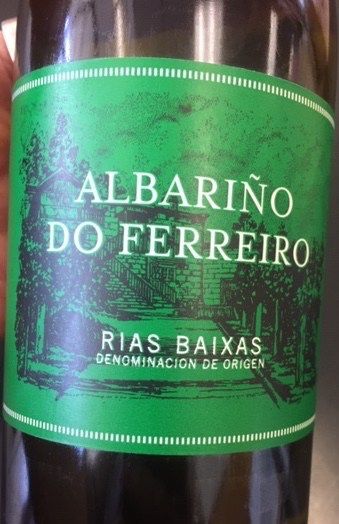
A Festival of National Tourist Interest since 1977, International Albariño Day is held each year in the small coastal town of Cambados in western Spain each year during the first few days of August. It is only in the last decade that this little-known white has achieved international distinction and people around the globe chose one day to celebrate this fine grape; this year it is August 1.
Commonly grown in Rias Baixas, a wine region in Galicia in northwestern Spain, Albarino is a crisp, fragrant acidic white variety that pairs well with light to mild cuisines. Shrimp, scallops, halibut, sole, tilapia, octopus, crab, trout, chicken, and tofu are ideal matches, as well as soft cheeses and citrusy or herby dishes. In addition, Albariño stands well on its own as an aperitif.
Grown in Portugal as well, Alvarinho (same grape!) is grown in the northern Monção and Melegaço, which, ironically, is situated close to Rías Baixas on the southern banks of the Minho River. The two grapes share similar names and flavor profiles; both are crisp and acidic, high in alcohol with apricot and peach essences.
Whether you choose Spain or Portugal (or both), uncorked a bottle of Albariño today and enjoy this noteworthy summer white.
Recently I attended a wine tasting featuring little-known grapes of Italy. Led by Jan D’Amore of Jan D’Amore Wines, a Brooklyn, NY based importer and distributor, the wines were a mixture of whites and reds from various regions of Italy, personally selected by Jan himself.
A native of Rome, Italy, Jan came to the United States over 30 years ago to pursue a heavy metal music career with his bandmates. Settling in Los Angeles, he lasted six months with them, but refused to return to Rome. After some soul-searching, he headed east to New York to explore the art scene and display his talents as an artist. It was here Jan also waited tables and was exposed to the world of wine; growing up in Rome, he only knew the white table wines of Frascati. At the suggestion of an acquaintance, Jan’s next path took him into wine sales. Working as a sales rep for Viniferia Imports, he learned the ins and outs of the business before finally setting out on his own.
Traveling around Italy and doing a lot of research is what led to his securing the first five producers in his collection. Now, following recommendations is a big part of how Jan finds his winemakers; currently he has over 30 producers in his portfolio. His website highlights each winemaker, the winery and the wines he distributes.
At the tasting, Jan opened seven wines from his portfolio; two whites and five reds. These were two of my favorites:
Made from 100% Famoso grapes, this white wine was the first wine of the evening we tasted and I was immediately in love. Indigenous to the Emiliia-Romagna region of Italy, this grape was long considered extinct, but has been recently revitalized by some small vineyards, one of which is Ancarani. Fragrant and unique, this dry white has fresh floral aromas, ripe exotic-fruit notes, and is light and crisp on the palate.
This Umbrian red is made from 100% Ciliegiolo grapes by vintner Leonardo Bussoletti. The name Ciliegiolo means “little cherry” so it is not surprising that the nose is crazy with fresh red cherries. There are also some floral notes with tones of black pepper. Luscious on the palate with mild acidity and very little tannin, strawberry and raspberry fruit stand out.
If Italian wines are your thing, then take some time and explore Jan’s site; you might discover something new and exciting. If you cannot find his wines in a store near you, then look for the grape from another producer. Or let me know and I would be happy to help!
When choosing a bottle of wine, everyone has their favorites; red, white, sparkling, or rose’. We also have particular nuances that we look for; bone dry, dry, off-dry, semi-sweet, or sweet.
Lately I have been getting a recurring question (mostly when discussing whites) –“What do you mean when you say dry?” I know it may sound snide, but the correct response to this is, “Not sweet!” When a winemaker produces dry wine, they let the fermentation process completely finish, allowing the yeast to absorb all the sugar present, leaving no residual sugar. No sugar; hence, dryness.
Other confusing terms are the words fruity and sweet; they are notably different. The amount of residual sugar left behind after fermentation, will determine the level of sweetness a wine will have. Fruitiness will always be detected at different levels, even if a wine is dry. Many people are usually surprised to hear this; it is a big eureka moment for them!
Dry New Zealand Sauvignon Blanc and semi-sweet New York Riesling.
So what do you look for? Now that the days are getting warm, are you gravitating towards a crispy, dry, citrusy Sauvignon Blanc or a sweet, fruity Riesling? Or do you drink red all year long and reach for a bone dry, fruit-forward Sangiovese from Chianti, rather than a dry, ripe Garnacha from Spain?
Bone dry Sangiovese from Chianti and a dry Garnacha from Spain.
Whatever your preference, next time you are out shopping for a bottle, try to think about what it is you favor when selecting a wine, and reach for something new to try. Or ask for help; it is how you learn.